Ownership, permission, privacy, and reuse
TikTok Download Permissions and Copyright
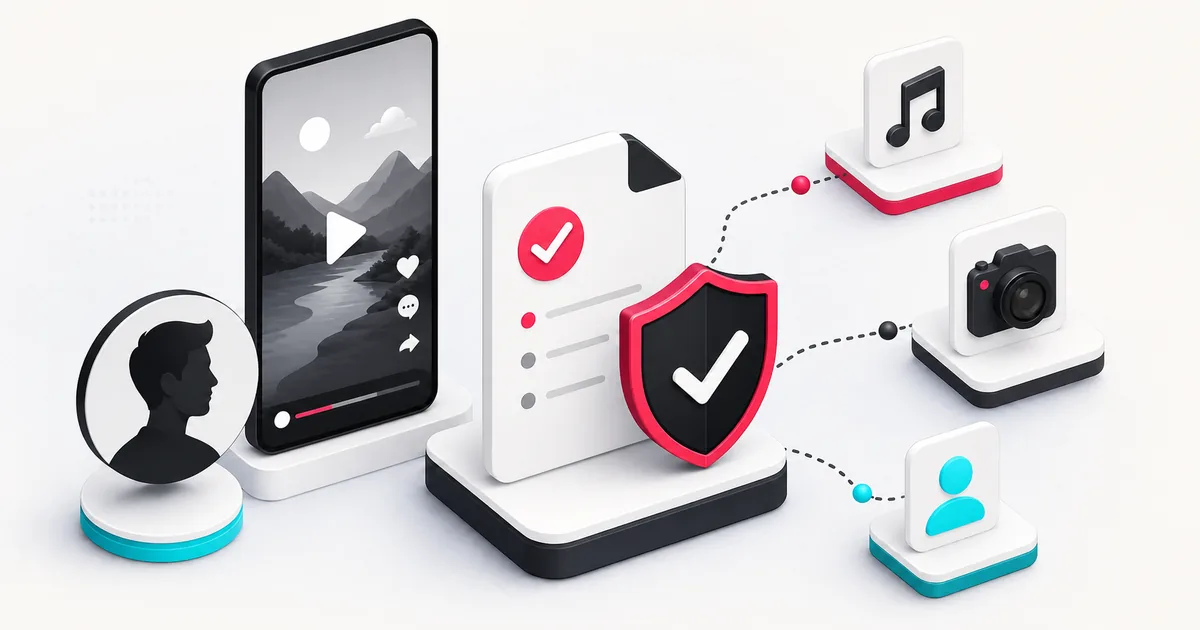
A public TikTok post can still contain protected video, music, photography, artwork, trademarks, a person's voice, or private information. Before downloading or reusing it, identify what you plan to do and whether the relevant creator or rights holder has allowed that use.
Start with three practical questions
Permission is easier to assess when the intended use is specific. “Can I download this?” is too broad because saving a backup, reposting to another account, editing a compilation, and using a clip in an advertisement are different actions.
- What exactly will you save: video, slideshow photos, audio, or the complete post?
- Who created or controls each important part of that material?
- What will you do next: keep it privately, edit it, publish it, sell it, or use it to promote something?
The clearest permission cases
You usually have the strongest practical basis when you created the material yourself, when the rights holder directly authorised the planned use, or when a licence clearly covers that use. Keep the scope of the permission in mind: permission to save a copy does not automatically include permission to edit, sell, sublicense, or advertise with it.
If someone sent you a file privately, that delivery alone may not grant publication rights. Ask for permission in a form you can keep when the use matters.
Public access is not the same as permission
A public post is visible without a private account relationship, but visibility does not transfer ownership. TikTok lets creators manage who can view posts and whether in-app downloads are enabled. Those settings are useful signals about the creator's choices, not a complete legal analysis.
TikTok also notes that disabling its download setting prevents in-app downloads but does not stop people from sharing a link. A shareable link should not be treated as a licence to republish the media.
One post can contain several owners
The person who uploaded a post may own the recorded video while using music, artwork, footage, logos, or photography controlled by someone else. Permission from the uploader may not cover every component.
- Video footage and editing
- Music, speech, and other recorded audio
- Photography, illustrations, and text shown in the post
- Trademarks, product designs, and branded material
- A person's face, voice, name, or other identity-related interests
Personal saving and public reuse are different
Keeping a file for an authorised personal purpose can carry a different risk from uploading it publicly. Reposting changes the audience and may remove the context, caption, attribution, or controls attached to the original post.
Editing can create additional concerns when it changes meaning, suggests endorsement, combines the work with advertising, or exposes information the original context did not emphasise.
Credit helps, but it is not permission
Naming the creator can be respectful and may be required by a licence, but credit does not replace permission when permission is needed. “No copyright intended” and similar disclaimers do not create rights you do not have.
If permission includes attribution instructions, follow them accurately and keep the creator's name, required link, and licence notice with the reused material.
Privacy and people shown in a post
A post can include people who did not upload it. Consider whether they expected the scene to be copied, edited, or used in a new context. Sensitive locations, children, health information, identity documents, and private conversations need particular care.
Do not assume that a person appearing in a public post agreed to commercial promotion or a misleading edit. Obtain appropriate consent when the new use could affect privacy, dignity, safety, or endorsement.
Keep a record when permission matters
Save the message, licence, agreement, or other evidence that describes who granted permission, which material it covers, the intended channels, the territory or duration if relevant, and whether editing or commercial use is allowed.
A screenshot of a public post proves that it was visible at one time; it does not by itself prove ownership or permission.
If you are a rights holder
SSSTikVid does not control the source post on TikTok. To report material associated with this service, provide enough information to identify the protected work, the relevant source URL, your authority, and a reliable way to contact you. Use TikTok's own process when you also want action on the original post.
Questions users ask
Is every personal download lawful?
Not necessarily. The answer can depend on the work, licence, location, platform terms, access method, and intended use.
Can I repost a downloaded video if I give credit?
Credit may be appropriate, but it does not replace permission when the rights holder's permission is required.
Does a public TikTok post mean it is free to use?
No. Public visibility does not transfer copyright, privacy, publicity, trademark, or contractual rights.
Can the uploader give permission for the music?
Only if the uploader controls those rights or is authorised to license them. Music can have separate owners and usage terms.
Does SSSTikVid decide who owns a post?
No. SSSTikVid provides a download utility and general guidance; the user is responsible for the source and intended use.
What should a permission message include?
It should identify the material, planned use, platforms, editing, commercial status, duration where relevant, and the person granting authority.